Saxon King
Edgar of Wessex was born circa 942, the second son of Edmund the Elder Saint Ælfgifu of Shaftesbury. He was sixteen when he ascended the throne on the death of his elder brother, Edwy in October 959.
In common with his brother Edwy and others of his predecessors in the House of Wessex, Edgar was a very small man, recorded as being less than five feet tall, although possessing great personal magnetism. The Anglo-Saxon Chronicle describes him as being handsome and speaks highly of his achievements.
Statue of Edgar the Peaceful from Lichfield Cathedral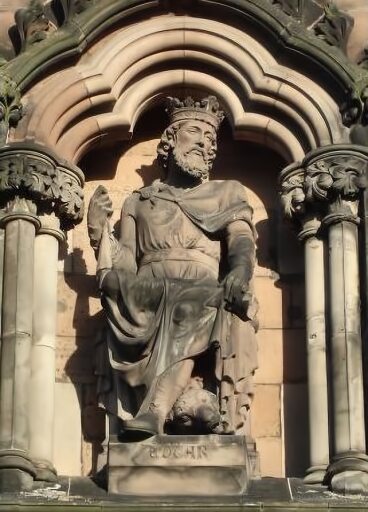
Edgar had been educated by Æthelwold, Abbot of Abingdon, a friend of St. Dunstan's. His coronation, which took place at Bath in 973, was the first to be described in detail in the annals of English history and on this ceremony, all future coronations of English Kings, up to the present day, have been based. King Edgar maintained the peace established by earlier kings of the House of Wessex.
Following his coronation, Edgar travelled north to Chester, where he held court in a palace in a place now known as Edgar's field near the old Dee bridge in Handbridge. There he was met by eight sub-Kings of Britain whom he had summoned. Among them was Kenneth, King of Scots and his son Malcolm, King of the Cumbrians, Maccus, king of several isles and five others, named Dufnall, Siferth, Huwall, Jacob and Juchill. In a demonstration of the power of Wessex, Edgar was rowed up the River Dee to the Monastery of St. John the Baptist, by all eight sub-Kings, attended by a great concourse of nobles. The entire occasion represented an assertion of Saxon supremacy over the Celts of England, Scotland and Wales.
Edgar of Wessex was born circa 942, the second son of Edmund the Elder Saint Ælfgifu of Shaftesbury. He was sixteen when he ascended the throne on the death of his elder brother, Edwy in October 959.
In common with his brother Edwy and others of his predecessors in the House of Wessex, Edgar was a very small man, recorded as being less than five feet tall, although possessing great personal magnetism. The Anglo-Saxon Chronicle describes him as being handsome and speaks highly of his achievements.
Edgar had been educated by Æthelwold, at the Abbot of Abingdon, a friend of St. Dunstan's. His coronation, which took place at Bath in 973, was the first to be described in detail in the annals of English history and on this ceremony, all future coronations of English Kings, up to the present day, have been based. King Edgar maintained the peace established by earlier kings of the House of Wessex.
St. Dunstan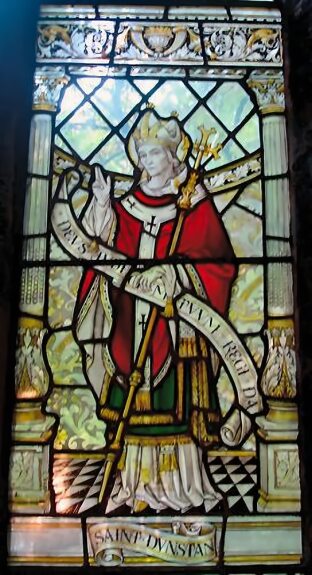
Following his coronation, Edgar travelled north to Chester, where he held court in a palace in a place now known as Edgar's field near the old Dee bridge in Handbridge. There he was met by eight sub-Kings of Britain whom he had summoned. Among them was Kenneth, King of Scots and his son Malcolm, King of the Cumbrians, Maccus, king of several isles and five others, named Dufnall, Siferth, Huwall, Jacob and Juchill. In a demonstration of the power of Wessex, Edgar was rowed up the River Dee to the Monastery of St. John the Baptist, by all eight sub-Kings, attended by a great concourse of nobles. The entire occasion represented an assertion of Saxon supremacy over the Celts of England, Scotland and Wales.
Edgar the Peaceful married twice, his first wife, Elfleda was divorced to enable him to marry Elfrida, daughter of Ordgar, ealdorman of Devon and Edgar's mistress, she was the widow of Æthelwold, Ealdorman of East Anglia and a woman of notorious reputation. She was said to have been the King's lover before the death of her first husband.
He reputedly killed Earl Æthelwold, his rival for Elfrida's affections, in 963, near present-day Longparish, Hampshire, after Ethelwold advised the king against marrying the beautiful Elfrida, but then married her himself. The event was commemorated in 1825 by the erection of Dead Man's Plack. Edgar had Elfrida crowned Queen at Bath Abbey on 11th May, 975. The first instance of a consort being referred to as Queen since Judith of France, widow of Ethelwulf and his son Ethelbald.
In a popular move, Edgar recalled St Dunstan from exile, who returned in triumph and was appointed Bishop of Worcester, in 959 he became Bishop of London before Edgar finally made him Archbishop of Canterbury in 961.
Dunstan managed to exert some control over the King's policies. Acting on the advice of Dunstan, Edgar raised his companion Oswald to be Bishop of Worcester. Another friend of Dunstan's, Edgar's former tutor, Æthelwold of Abingdon, was made Bishop of Winchester. This trio was to dominate the English church for the remainder of the King's reign.
Edgar the Peaceful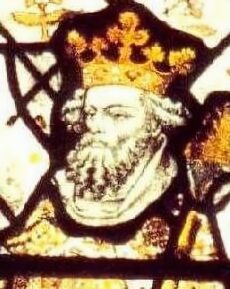
Edgar had many mistresses, one of these was the beautiful Wulfrida, whom he carried off from Wilton Abbey, it is unsure if she had actually taken her vows as a nun. For this the King was forced to do pennance for seven years, purportedly having to fast twice a week. He had 4 children in all, by his first wife Ethelflaed, he had two sons, the eldest Edward, succeeded him as King of England, and Edmund. An illegitimate daughter, Edith or Eadgyth, born to by Wilfrida, was educated at Wilton Abbey and was cannonised after her death in 984. A third son, born to Queen Elfthryth suceeded his half-brother Edward as Ethelred II.
William of Malmesbury, reporting on Edgar's slightness of height and build, records that at a banquet that followed the meeting at Chester, Kenneth, King of Scots, commented jokingly that it seemed extraordinary to him how so many provinces should be held by "such a sorry little fellow."
Under Edgar, the union of England under one dynasty was firmly established. Highly conscious of the importance of sea-power, the king had built up a navy of 3,600 ships by the time of his death, which were used to guard England's shores from the incursions of the Danes.
King Edgar kept peace in the Danelaw largely by a policy of non-interference and displayed his neutrality by ravaging the Saxons of Thanet for the alleged ill-treatment of York merchants.
The years of peace enjoyed by Edgar made it possible for him to make changes in England's administrative structure and it was Edgar who divided England into shires, each of which were divided into hundreds. His laws were much respected by future generations, he greatly encouraged trade and protected the currency. He was severe on those that withheld church dues and a great believer of monastic reform.
King Edgar the Peaceful, or the Pacific as he is sometimes referred to, died at the summit of his power, at Winchester, the ancient capital of Wessex, on 8th July, 975, at the age of only thirty-three and was buried at Glastonbury Abbey in Somerset.
Edgar the Peaceful married twice, his first wife, Elfleda was divorced to enable him to marry Elfrida, daughter of Ordgar, ealdorman of Devon and Edgar's mistress, she was the widow of Æthelwold, Ealdorman of East Anglia and a woman of notorious reputation. She was said to have been the King's lover before the death of her first husband.
He reputedly killed Earl Æthelwold, his rival for Elfrida's affections, in 963, near present-day Longparish, Hampshire, after Ethelwold advised the king against marrying the beautiful Elfrida, but then married her himself. The event was commemorated in 1825 by the erection of Dead Man's Plack. Edgar had Elfrida crowned Queen at Bath Abbey on 11th May, 975. The first instance of a consort being referred to as Queen since Judith of France, widow of Ethelwulf and his son Ethelbald.
In a popular move, Edgar recalled St Dunstan from exile, who returned in triumph and was appointed Bishop of Worcester, in 959 he became Bishop of London before Edgar finally made him Archbishop of Canterbury in 961.
Dunstan managed to exert some control over the King's policies. Acting on the advice of Dunstan, Edgar raised his companion Oswald to be Bishop of Worcester. Another friend of Dunstan's, Edgar's former tutor, Æthelwold of Abingdon, was made Bishop of Winchester. This trio was to dominate the English church for the remainder of the King's reign.
Edgar had many mistresses, one of these was the beautiful Wulfrida, whom he carried off from Wilton Abbey, it is unsure if she had taken her vows as a nun. For this the King was forced to do penance for seven years, purportedly having to fast twice a week. He had 4 children in all, by his first wife Ethelflaed, he had two sons, the eldest Edward, succeeded him as King of England, and Edmund. An illegitimate daughter, Edith or Eadgyth, born to Wilfrida, was educated at Wilton Abbey and was canonised after her death in 984. A third son, born to Queen Elfthryth succeeded his half-brother Edward as Ethelred II.
William of Malmesbury, reporting on Edgar's slightness of height and build, records that at a banquet that followed the meeting at Chester, Kenneth, King of Scots, commented jokingly that it seemed extraordinary to him how so many provinces should be held by "such a sorry little fellow."
Under Edgar, the union of England under one dynasty was firmly established. Highly conscious of the importance of sea-power, the king had built up a navy of 3,600 ships by the time of his death, which were used to guard England's shores from the incursions of the Danes.
King Edgar kept peace in the Danelaw largely by a policy of non-interference and displayed his neutrality by ravaging the Saxons of Thanet for the alleged ill-treatment of York merchants.
The years of peace enjoyed by Edgar made it possible for him to make changes in England's administrative structure and it was Edgar who divided England into shires, each of which were divided into hundreds. His laws were much respected by future generations, he greatly encouraged trade and protected the currency. He was severe on those that withheld church dues and a great believer of monastic reform.
Edgar the Peaceful, or the Pacific as he is sometimes referred to, died at the summit of his power, at Winchester, the ancient capital of Wessex, on 8th July, 975, at the age of only thirty-three and was buried at Glastonbury Abbey in Somerset.


Edwy the Fair PreviousNext Edward the Martyr